
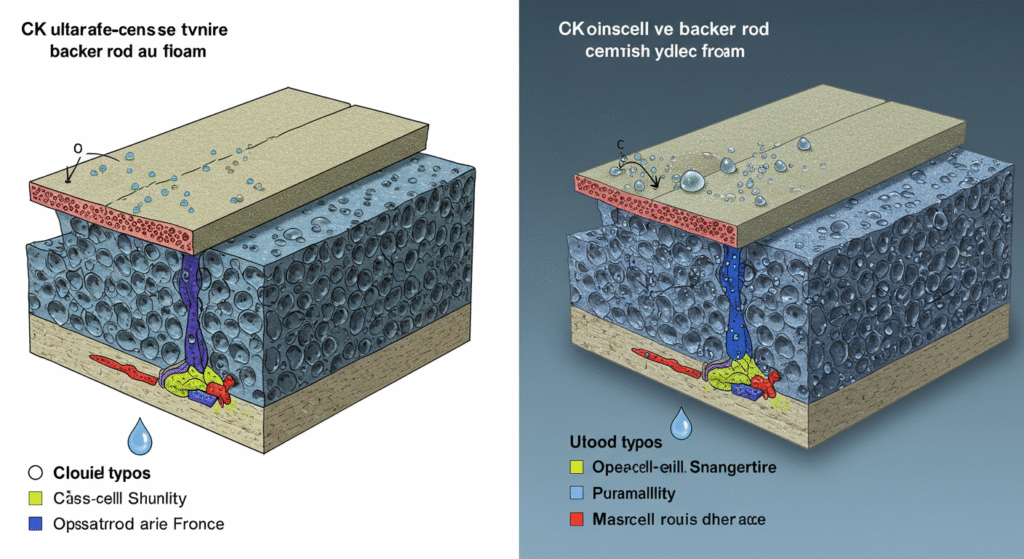
أساسيات حبل الحشو الخلفي: الفرق بين الفوم مغلق الخلايا ومفتوح الخلايا
وظيفة حبل الحشو
حبل الحشو الخلفي Backer Rod يضبط عمق مادة السدّ داخل الفاصل ويمنع الالتصاق ثلاثي الجوانب، مما يسمح لمادة السدّ بالحركة المرنة مع التمدد والانكماش دون إجهاد زائد.
الفوم مغلق الخلايا
الفوم مغلق الخلايا لا يسمح بامتصاص الماء بسهولة، لذلك يناسب التطبيقات الخارجية والفواصل المعرضة للرطوبة. كما يوفّر دعماً جيداً لمادة السدّ ويحافظ على شكل مقطع منتظم.
الفوم مفتوح الخلايا
الفوم مفتوح الخلايا أكثر قابلية للانضغاط وقد يناسب بعض التطبيقات الداخلية أو الفواصل غير المنتظمة، لكنه ليس الخيار الأول عند الحاجة إلى مقاومة مياه عالية. الاختيار يعتمد على بيئة الفاصل ونوع مانع التسرب.
backer rod، حبل الحشو الخلفي Backer Rod، sealant، مانع التسرب / مادة السدّ، thermal insulation، العزل الحراري والفاصل الحراري
Backer Rod 101: Understanding Closed-Cell vs. Open-Cell Foam
Backer Rod 101: Understanding Closed-Cell vs. Open-Cell Foam Introduction: Choosing the Right Backer Rod for Your Application Selecting the appropriate backer rod is crucial for ensuring the longevity and effectiveness of any sealant application. This seemingly simple component plays a vital role in preventing moisture ingress and maintaining…
Article overview
Backer Rod 101: Understanding Closed-Cell vs. Open-Cell Foam
Introduction: Choosing the Right Backer Rod for Your Application
Selecting the appropriate backer rod is crucial for ensuring the longevity and effectiveness of any sealant application. This seemingly simple component plays a vital role in preventing moisture ingress and maintaining structural integrity. This guide clarifies the key distinctions between closed-cell and open-cell foam backer rods to help you make an informed decision for your moisture-sensitive application.
Closed-Cell vs. Open-Cell Foam: A Detailed Comparison
Closed-Cell Foam Backer Rods
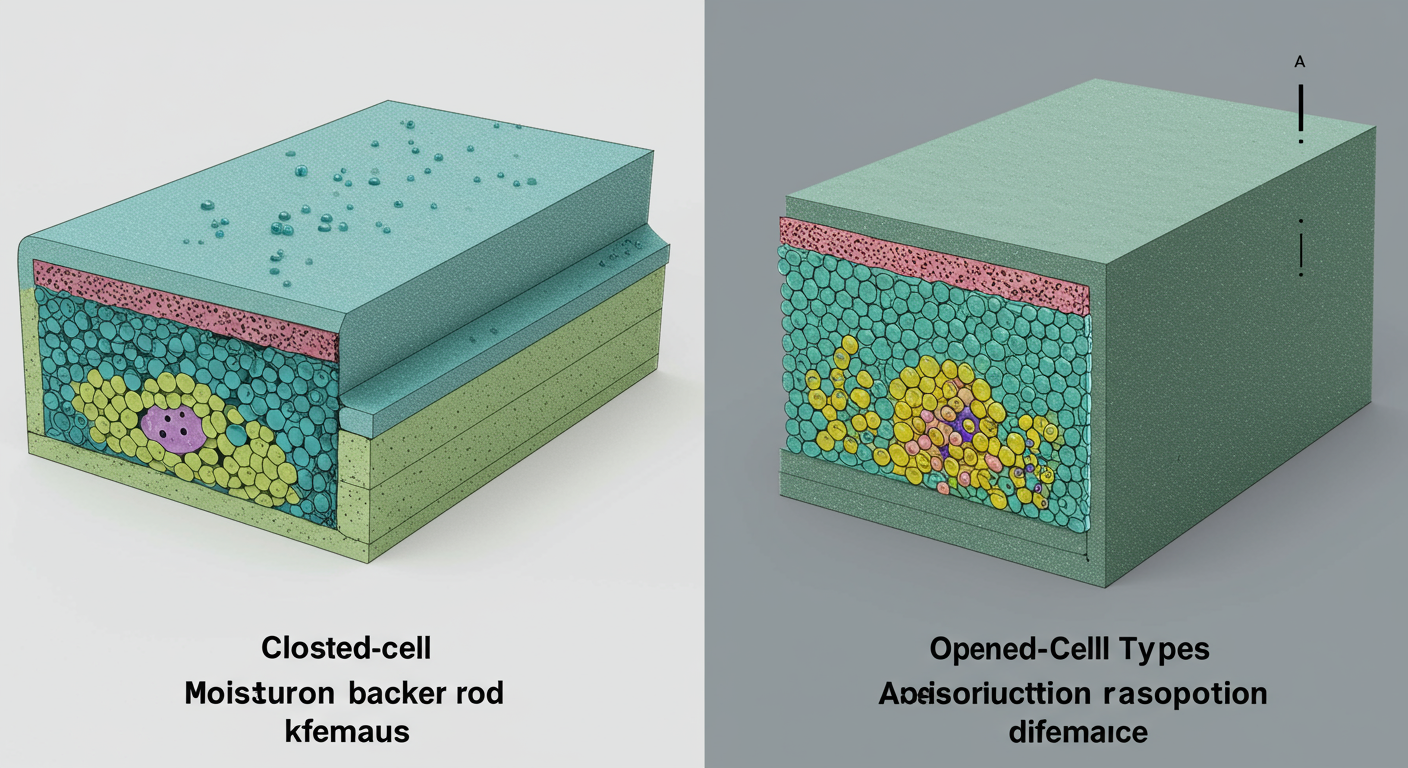
Closed-cell foam features a non-porous structure, meaning its cells are completely sealed. This results in several key advantages:
- Superior Moisture Resistance: Closed-cell foam provides an excellent barrier against water infiltration, making it ideal for exterior applications and areas prone to moisture.
- Improved Thermal Insulation: The sealed cells minimize heat transfer, offering superior thermal insulation properties compared to open-cell foam.
- Enhanced Durability: The dense structure contributes to increased durability and resistance to compression and degradation.
Open-Cell Foam Backer Rods
Open-cell foam has a porous structure, meaning its cells are interconnected. This leads to different characteristics:
- Higher Air Permeability: Open-cell foam allows for some air passage, making it less effective as a moisture barrier.
- Lower Thermal Insulation: Due to air permeability, its thermal insulation properties are less efficient than closed-cell foam.
- Greater Flexibility: Its porous structure results in greater flexibility, which can be advantageous in certain applications.
Choosing the Right Backer Rod: Application Considerations
The choice between closed-cell and open-cell foam depends heavily on the specific application. Consider the following factors:
- Moisture Exposure: For applications exposed to significant moisture (e.g., exterior walls, below-grade installations), closed-cell foam is essential.
- Thermal Performance: If thermal insulation is a priority (e.g., HVAC systems), closed-cell foam offers superior performance.
- Required Flexibility: For applications requiring more flexibility during installation, open-cell foam might be a better choice.
The Vensco Advantage: Your Partner in Construction Solutions
At Vensco Engineering Trading & Supplies, we offer a comprehensive range of high-quality backer rods, ensuring you have the right product for your specific needs. Our deep product specialization, coupled with our expert technical consultation services, guarantees the successful completion of your projects. Choose Vensco for reliable, locally sourced materials and a commitment to supporting your construction needs in Egypt.
Conclusion: Making the Right Choice
Understanding the differences between closed-cell and open-cell foam backer rods is vital for ensuring the long-term success of your projects. By carefully considering the application requirements and leveraging Vensco's expertise, you can confidently select the optimal solution for maximum performance and durability.
Get a personalized quote for your insulation needs today.
backer rod, حبل الحشو الخلفي Backer Rod, sealant, مانع التسرب / مادة السدّ, thermal insulation, العزل الحراري والفاصل الحراري